
In the culinary world, a sharp knife is a chef’s best friend, but without proper safety measures, it can quickly become a foe. Picture this: you’re dicing onions, and suddenly your finger becomes the main ingredient. Ouch! Kitchen knife safety isn’t just a good idea; it’s essential for keeping those fingers intact and your cooking experience enjoyable.
Importance Of Kitchen Knife Safety
Kitchen knife safety remains crucial for everyone, from professional chefs to home cooks. Accidents in the kitchen can lead to severe injuries or even long-term disabilities. Sharp knives can make food preparation efficient, yet they can become dangerous without proper care. Understanding safe handling techniques contributes significantly to a secure cooking environment.
Using a knife correctly influences not only the safety of the individual but also the overall cooking experience. For example, storing knives appropriately prevents unintentional cuts. Regularly maintaining knife edges helps limit slippage while cutting, reducing the risk of accidents. Practicing proper cutting techniques ensures food remains safely controlled, which minimizes the chances of injury.
Following some essential rules drastically enhances safety. Always use a cutting board instead of holding food in the hand. Blocking energy while cutting can lead to severe injuries. Moreover, focusing on the knife’s position during tasks keeps hands out of the way.
Staying aware of one’s surroundings also plays a vital role in maintaining kitchen safety. If someone else is present, communication about movements can prevent accidents. Respecting the tools by treating them with care aligns with maintaining safety standards. Keeping knives out of reach of children ensures their safety, providing a more secure cooking environment.
Emphasizing the importance of knife safety helps create a positive culinary experience. Taking precautions reduces the likelihood of injury and enhances efficiency. Acknowledging that proper knife handling is a fundamental skill in the kitchen empowers individuals to cook with confidence.
Basic Safety Tips
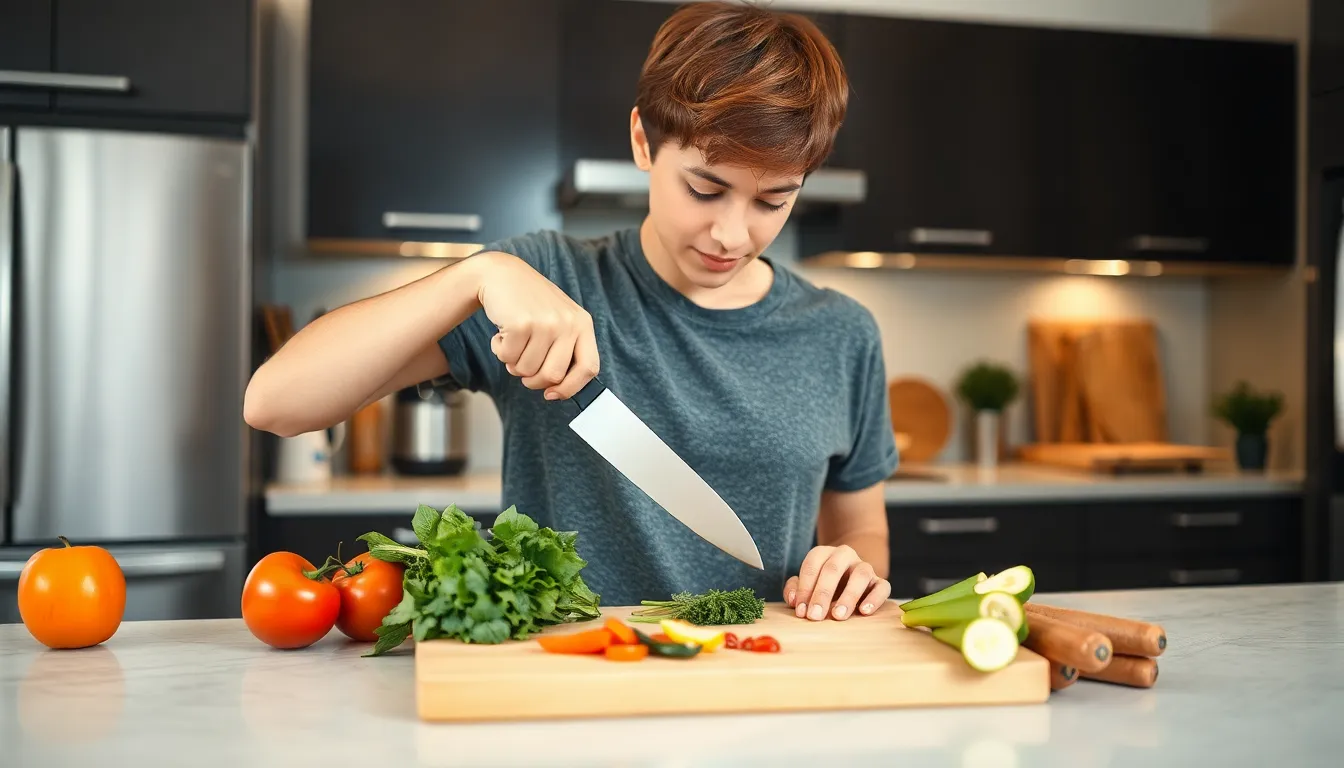
Understanding kitchen knife safety enhances cooking experiences. Following essential practices leads to fewer accidents and a more enjoyable environment.
Choosing The Right Knife
Selecting the appropriate knife is crucial. A chef’s knife works best for chopping vegetables. Utility knives serve well for slicing ingredients with precision. Opting for a serrated knife ensures easy cutting for bread and delicate items. Choosing a knife that feels comfortable in hand improves control. Each type of knife has specific uses, making thoughtful selection key to safety.
Proper Handling Techniques
Practicing safe handling techniques minimizes injuries. Always grip the knife firmly, ensuring stability during use. Pointing the blade down while walking prevents accidental cuts. Keeping knives out of reach of children maintains safety in busy kitchens. Cutting away from the body reduces the risk of self-injury. Using a cutting board provides a stable, designated area for food preparation. Regularly maintaining a sharp edge increases efficiency and control, enhancing overall safety.
Knife Maintenance For Safety
Maintaining kitchen knives plays a crucial role in ensuring safe food preparation. Proper care extends both the lifespan of the knives and the security of their use.
Keeping Knives Sharp
Sharp knives facilitate smoother and safer cuts. They reduce the force needed while cutting, minimizing the chance of slipping. Users can maintain sharpness through regular honing and occasional sharpening. Honing aligns the blade’s edge, while sharpening involves grinding away material to restore the cutting edge. Investing in a quality sharpening stone or tool ensures optimal results. Regularly checking the knife’s sharpness promotes efficiency and safety during meal preparation.
Storing Knives Safely
Safe knife storage prevents accidents and protects blades. Magnetic strips or knife blocks provide effective storage solutions while keeping knives organized. Placing knives in a drawer without protection increases the risk of injury when reaching inside. Using blade guards also shields sharp edges from damage and fingers from cuts. Whatever method chosen, keeping knives out of reach from children remains essential. Safe storage cultivates a kitchen environment where cooking can occur without fear of accidents.
Additional Safety Practices
Safety in the kitchen extends beyond just proper knife handling. Implementing additional practices enhances overall safety.
Avoiding Distractions While Cutting
Staying focused while cutting is crucial for preventing accidents. Turn off electronics and avoid conversations that could divert attention. Engaging in multitasking increases the risk of mishaps. It’s best to limit interruptions and designate a dedicated time for food prep. Set a timer for focused cooking sessions to minimize distractions encountered during slicing or dicing. Prioritizing concentration can significantly reduce the chance of injury.
Using A Cutting Board Correctly
Using a cutting board properly ensures a safer food preparation process. Placing the board on a stable, flat surface prevents it from sliding during use. Choosing a cutting board made from non-slip materials further enhances stability. Always use separate boards for raw meats and vegetables to prevent cross-contamination. Keeping the cutting area clear of clutter facilitates better handling and improves workflow. Regularly cleaning and sanitizing cutting boards is essential for maintaining kitchen hygiene and safety.
Practicing kitchen knife safety is essential for anyone who enjoys cooking. By following the outlined tips and techniques cooks can significantly reduce the risk of accidents. A well-maintained knife not only enhances efficiency but also contributes to a safer cooking environment.
Staying focused and aware while preparing meals is just as important as proper knife handling. Emphasizing safety allows for a more enjoyable cooking experience. With the right precautions in place cooks can embrace their culinary adventures with confidence and skill.