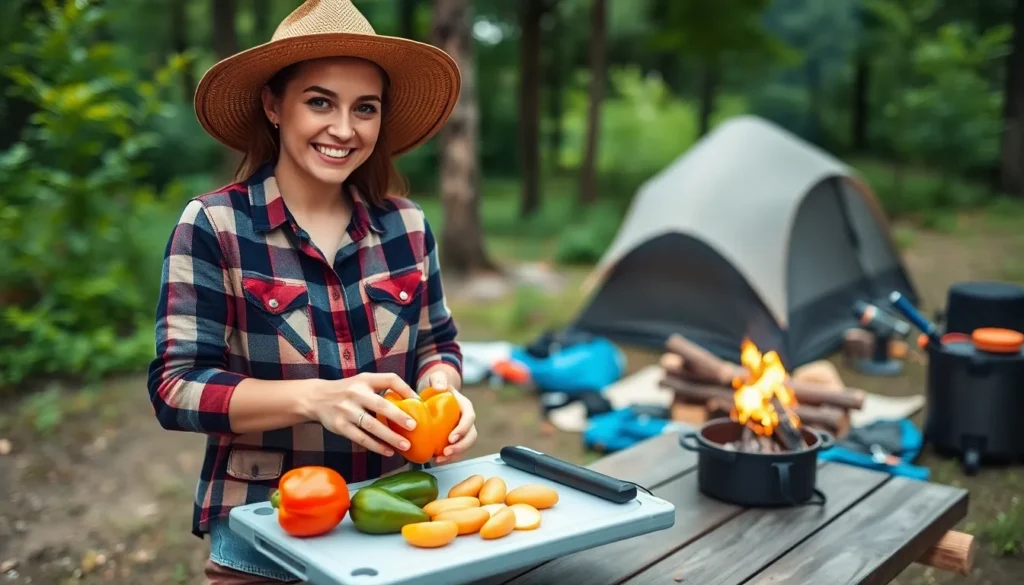
Camping can be a blast, but cooking in the great outdoors often turns into a comedy of errors. Who hasn’t tried to whip up a gourmet meal over a campfire only to end up with charred marshmallows and a side of frustration? Fear not, adventurous souls! With a few clever camping kitchen hacks, you can elevate your outdoor cooking game from “meh” to “magnificent” without losing your sense of humor.
Essential Camping Kitchen Hacks
Optimize meal prep with portable cutting boards. Made from lightweight materials, these boards help prevent messes at the campsite.
Utilize mason jars to store dry ingredients. Many campers find jars effective for organizing spices, grains, and even drinks.
Use a grill basket for easy cooking. Grilling vegetables or seafood becomes simpler, as a basket prevents small pieces from slipping through the grate.
Pack a single pot for versatile cooking. With one pot, meals such as soups and stews cook quickly, saving time and reducing cleanup.
Incorporate a collapsible sink. This space-saving tool simplifies washing dishes, especially in areas without a water source.
Employ prepped meals in advance. Preparing and freezing meals before the trip makes it easier to heat and serve when at the campsite.
Consider using foil for cooking. Wrapping foods in aluminum foil helps steam and flavor them while also minimizing cleanup.
Invest in a portable spice rack. Keeping spices organized and easily accessible enhances flavor without cluttering cooking space.
Utilize a camp stove for efficiency. A two-burner model allows the preparation of multiple dishes simultaneously.
Implement reusable utensils and plates. Reducing waste contributes to environmental sustainability while ensuring meal convenience.
All these hacks enhance efficiency and enjoyment during outdoor cooking adventures. Reinforcing these strategies helps create a more successful camping kitchen experience.
Efficient Meal Preparation
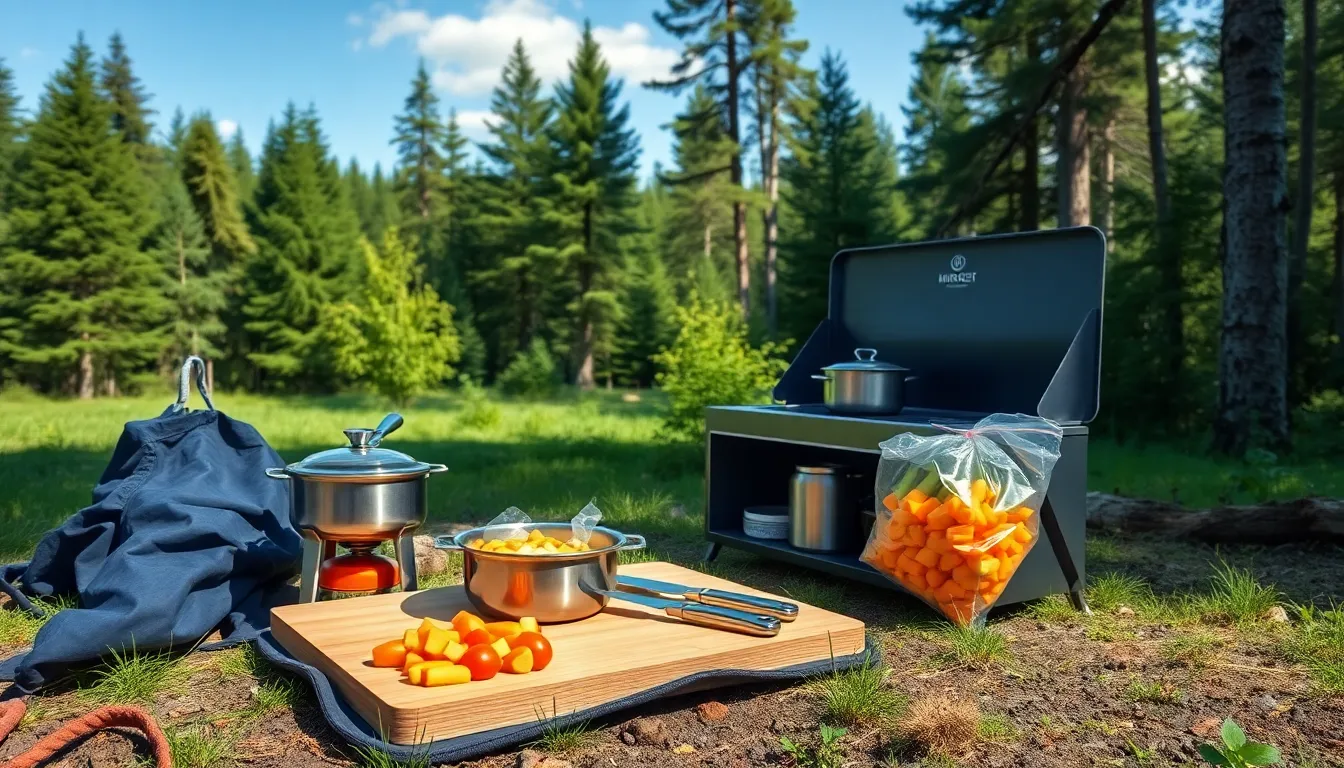
Efficient meal preparation enhances the camping experience while ensuring delicious meals with minimal effort. Several strategies improve meal prep, making outdoor cooking convenient and enjoyable.
Pre-Camping Meal Prep Tips
Plan meals ahead of time. When preparing, portion ingredients into individual bags to save space and simplify cooking. Chop vegetables before packing to cut down on prep time at the campsite. Utilize freezer-safe containers for meats and marinades; they double as ice packs in the cooler. Consider assembling pre-made meals in advance, allowing for quick reheating after a day of outdoor activities. Label bags clearly to streamline cooking. Sticking to a meal plan avoids last-minute stress, creating a more enjoyable outdoor adventure.
Essential Cooking Gear
Investing in compact and multifunctional equipment pays off during camping trips. A portable stove provides versatility for various cooking methods. Stainless steel cookware ensures durability and efficient heat distribution. Bring lightweight cutting boards that fold or roll for space efficiency. Mesh grill baskets make grilling easier and help prevent food from falling through grates. Reusable utensils and plates minimize waste while being practical. Lastly, don’t forget a collapsible sink for easy dishwashing and organization of cooking supplies. Prioritizing these items enhances overall meal preparation and dining experiences.
Space-Saving Cooking Solutions
Camping often requires efficient use of space. With clever tools and storage ideas, outdoor cooking can transform into an organized and enjoyable experience.
Multi-Purpose Tools
Utilizing multi-purpose tools maximizes functionality while minimizing gear. A combination knife and cutting board saves space and simplifies prep tasks. Collapsible bowls serve as mixing containers and storage solutions. Cooking spoons with built-in measuring features eliminate the need for separate measuring cups. A portable grill rack enhances versatility by allowing various cooking methods. Consider a Swiss Army knife, which packs multiple tools into one convenient device. Embracing these versatile gadgets eases the cooking process without cluttering the campsite.
Compact Storage Ideas
Compact storage solutions play a crucial role in organizing a camping kitchen. Stackable containers allow for efficient use of space when storing dry ingredients and leftovers. Opt for silicone bags instead of rigid containers. They are flexible and compress well, fitting snugly in any pack. Clip-on lids keep food fresh and minimize spills. Consider using a hanging organizer for utensils, spices, and lighter items to maximize vertical space. Magnetic strips can hold knives and metal utensilsfor easy access. These smart storage tips enhance the camping experience by ensuring everything stays neat and within reach.
Fire and Cooking Techniques
Outdoor cooking presents unique challenges, but innovative methods and safety precautions enhance the overall experience.
Alternative Cooking Methods
Utilizing varied cooking methods can make camp meals exciting. A Dutch oven allows for stew or bread baking over coals, while skewers can transform simple ingredients into kebabs. Solar cookers harness sunlight for slow, eco-friendly meals, providing a sustainable option. Grilling on a campfire grate infuses food with smoky flavors, making it a preferred choice for many. For quick meals, wrapped foil packets of vegetables and protein can be cooked directly in the coals, ensuring everything cooks evenly while keeping clean-up minimal.
Safety Tips for Campfire Cooking
Staying safe while cooking over a fire is paramount. Always have a bucket of water or sand nearby to extinguish flames if necessary. Campfire cooking should involve a sturdy platform to prevent collapses or spills. Using long-handled tools helps keep hands away from heat, reducing the risk of burns. Avoid wearing loose clothing that might catch fire and always supervise children closely around the fire. Properly extinguishing the campfire before leaving ensures safety for the next visitors and the environment.
Cleanup and Sustainability
Prioritizing cleanup and sustainability while camping enhances the experience. Incorporating eco-friendly practices reduces environmental impact and simplifies post-meal tasks.
Eco-Friendly Practices
Using biodegradable soap minimizes harm to natural water sources. Packing reusable items such as utensils and plates cuts down on waste. Choosing eco-friendly cookware made from sustainable materials assists in reducing plastic use. Opting for composting food scraps benefits soil health, keeping ecosystems thriving. Storing food in reusable containers prevents spills and storage issues, maintaining cleanliness.
Quick Cleanup Hacks
Simplifying cleanup can make a significant difference. Carrying a collapsible sink allows easy washing of dishes. Pre-soaking pots and pans in hot water helps loosen stuck-on food, making scrubbing effortless. Bringing along a natural sponge or cloth aids in wiping surfaces without leaving residue. Employing a portable trash bag for waste ensures proper disposal, keeping the campsite tidy.
Camping doesn’t have to mean sacrificing good food or convenience. With the right hacks and tools, outdoor cooking can become a delightful part of the adventure. By planning meals ahead and utilizing space-saving gear, campers can streamline their kitchen setup and focus on enjoying nature.
Embracing innovative cooking methods and prioritizing sustainability further enhances the experience. By adopting these strategies, campers can create memorable meals while minimizing their environmental footprint. A well-organized camping kitchen not only simplifies the cooking process but also elevates the overall camping trip, making it more enjoyable for everyone involved.