Is your kitchen a chaotic battlefield of pots, pans, and mysterious Tupperware lids? If so, you’re not alone. Many people find themselves wading through a sea of clutter every time they attempt to whip up a culinary masterpiece. But fear not! With a sprinkle of creativity and a dash of elbow grease, transforming that cluttered kitchen into an organized oasis is totally within reach.
Understanding DIY Kitchen Organization Hacks
DIY kitchen organization hacks provide practical solutions to common clutter problems. These hacks involve using everyday items and creative thinking to transform disorganized spaces into functional areas. Many individuals face challenges with pot and pan storage, mismanaged Tupperware lids, and disarrayed utensils. Simple adjustments can significantly enhance the kitchen’s usability.
Creative storage solutions like magnetic strips can free up drawer space. A magnetic strip can hold metal utensils or spice jars, making them easily accessible. Adjustable shelving creates additional space for baking sheets and mixing bowls. Customizing shelf heights accommodates different sizes, enabling optimal storage.
Using labeled bins helps in organizing pantry items. Groups such as snacks, grains, and spices can fit neatly within specific bins. Clear containers allow users to visualize contents at a glance, facilitating easier meal prep. Hooks for pots and pans can eliminate drawer clutter while adding an appealing aesthetic.
Repurposing items like wine crates adds character and functionality. Placed on countertops, these crates can store fresh produce or kitchen tools. DIY spice racks, crafted from simple wood, can maximize wall space, freeing up valuable counter area.
Utilizing vertical space effectively optimizes kitchens with limited square footage. Wall-mounted shelves can showcase cookbooks, decorative plates, and plants. Creating a small command center can streamline meal planning, housing essential supplies in one convenient location.
Emphasizing functionality while maintaining style leads to a harmonious kitchen environment. Adopting these DIY organization strategies transforms clutter into order, boosting efficiency and enjoyment in the cooking space.
Essential Tools and Materials
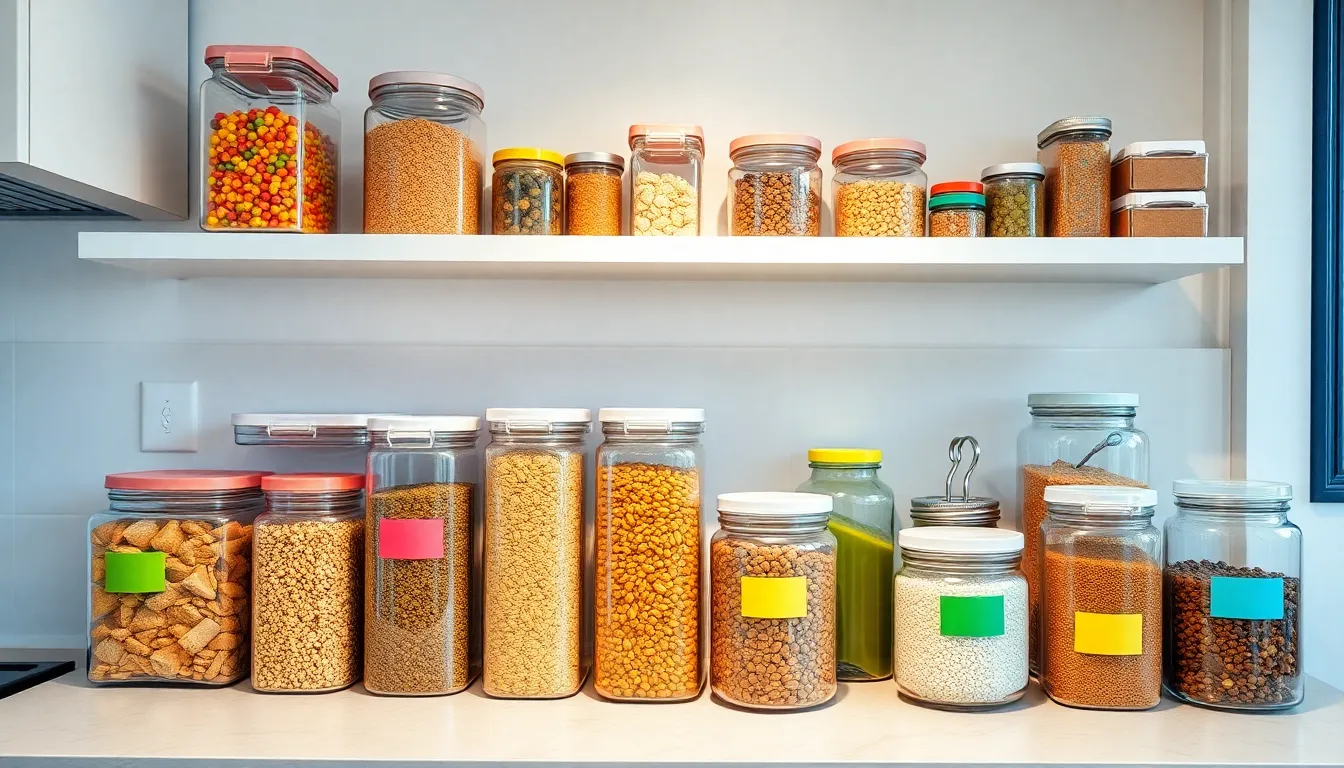
Every organized kitchen requires key tools and materials that facilitate effective storage and management. Gathering essential items can simplify the process and enhance efficiency.
Storage Containers
Storage containers play a crucial role in maintaining order in the kitchen. Utilizing clear plastic bins, glass jars, or metal canisters lets users easily identify contents. Choosing containers in various sizes accommodates different pantry items, from spices to grains. Opting for stackable designs maximizes vertical space while minimizing clutter. Ensuring that lids fit securely prevents spills and keeps ingredients fresh.
Labels and Markers
Labels and markers are vital for identifying contents and maintaining organization. Using adhesive labels or chalkboard markers promotes clarity in both pantry and fridge storage. Labeling each container with names and expiration dates aids in quick access and reduces food waste. Utilizing a consistent font or color scheme enhances visual appeal, making it easier to locate items. Keeping a set of blank labels on hand allows for quick updates as contents change.
Popular DIY Hacks for Kitchen Organization
Transforming a cluttered kitchen into an organized haven can be achieved through simple yet effective DIY hacks.
Drawer Dividers
Drawer dividers create separate sections for utensils, gadgets, and other kitchen tools. Organizers can purchase premade dividers or use materials like cardboard to create custom sizes. By placing each item in its designated space, cooks avoid rummaging through drawers for specific tools. This strategy enhances efficiency during meal preparation.
Magnetic Spice Racks
Magnetic spice racks allow easy access and create visual appeal. Cooks can attach metal containers to magnetic strips on walls or inside cabinet doors. This approach frees up counter and shelf space while keeping spices visible and organized. Use clear labels on containers to identify contents quickly, ensuring that spices don’t go unused or forgotten.
Under-Shelf Baskets
Under-shelf baskets maximize overhead storage in cabinets. These baskets utilize otherwise wasted space, allowing easy access to items like packets, small jars, or snacks. They hang beneath existing shelves, creating layered storage systems. This hack efficiently increases storage options without the need for extensive renovations. Arranging similar items together helps maintain an orderly kitchen.
Creative Solutions for Small Kitchens
Maximizing space is crucial for small kitchens, and clever solutions can transform even the most cluttered areas into organized retreats.
Vertical Space Utilization
Utilizing vertical space can dramatically enhance storage capabilities. Wall-mounted shelves accommodate cookbooks, decorative items, or frequently used ingredients. Magnetic strips serve as practical holders for utensils, freeing drawer space while keeping essentials within easy reach. Hanging pot racks provide visual appeal and accessibility, transforming pots and pans into decorative elements. Stacking tiered organizers in cabinets makes small items visible, ensuring every inch of vertical space works harder. Consider incorporating pegboards to customize storage solutions for an ever-changing kitchen assortment. By leveraging height, a small kitchen becomes more efficient and visually organized.
Multi-Purpose Furniture
Multi-purpose furniture adds functionality without sacrificing space. Use a kitchen island that features hidden storage or a breakfast bar to accommodate meal prep and gatherings. A rolling cart offers flexibility, serving as both workspace and extra storage that easily moves where needed. Folding tables save precious space, providing an option for dining or food prep that disappears when not in use. Bench seating with internal storage supports gatherings while hiding utensils or kitchen tools within. By integrating versatile furniture, small kitchens become more dynamic and user-friendly, enhancing their overall functionality.
Maintaining Your Organized Kitchen
Consistency plays a key role in sustaining an organized kitchen. Establishing daily routines, such as putting items back in designated spaces after use, ensures that clutter doesn’t accumulate. Regularly checking pantry items for expiration dates helps in maintaining freshness and organization.
Labeling containers remains essential for easy identification. Clearly marked bins for various categories, such as snacks or baking supplies, reduce time spent searching for ingredients. Utilizing clear plastic bins allows visibility of contents, preventing unnecessary purchases.
Monthly deep cleaning sessions keep the kitchen feeling fresh. This practice involves decluttering items that no longer serve a purpose, making room for useful tools. Assessing storage arrangements periodically ensures they meet changing needs.
Implementing a “one in, one out” rule supports an organized kitchen. This principle encourages replacing an item only after removing another, preventing overstocking. When new tools or utensils enter the kitchen, old ones can be donated or discarded.
Staying proactive about maintaining space enhances functionality. Cleaning up spills immediately prevents messes from becoming overwhelming. Striving to keep countertops clear of excess items encourages a more efficient workspace.
Lastly, involving all household members in organization efforts creates shared responsibility. Assigning specific kitchen tasks encourages teamwork and reinforces the importance of an organized environment. Everyone benefits from a clean, efficient cooking space.
Transforming a cluttered kitchen into an organized haven is achievable with the right DIY hacks. By utilizing everyday items and creative solutions, anyone can enhance both functionality and aesthetics. Simple adjustments like adding labeled bins and utilizing vertical space can make a significant difference.
Establishing consistent habits ensures that the kitchen remains a pleasant space for cooking and gathering. With these strategies in place, the kitchen can become not just a place for meal preparation but a source of joy and inspiration. Embracing these organization techniques leads to a more efficient and enjoyable cooking experience.