Kitchen cabinets often bear the brunt of daily cooking chaos. Grease splatters, mysterious stains, and a dusting of crumbs can turn these once-pristine surfaces into a culinary crime scene. But fear not! With a few clever hacks up your sleeve, cleaning those cabinets can feel less like a chore and more like a mini adventure.
Understanding Kitchen Cabinet Cleaning Hacks
Cleaning kitchen cabinets plays a crucial role in maintaining a tidy and inviting kitchen. Regular cleaning prevents build-up that can lead to unsightly stains and unpleasant odors.
Importance of Cleaning Kitchen Cabinets
Cleaning kitchen cabinets enhances the overall aesthetic of the space. Dust, grease, and stains contribute to an unattractive appearance, making the kitchen feel less inviting. Regular maintenance also extends the lifespan of cabinetry. Removing grime prevents deterioration of surfaces, keeping the cabinets functional and visually appealing. A clean kitchen fosters a healthier cooking environment by reducing the risk of bacteria buildup. Properly maintained cabinets contribute to the hygiene of food preparation areas.
Common Challenges in Kitchen Cabinet Maintenance
Maintenance of kitchen cabinets presents several common challenges. Grease accumulation from cooking is a frequent issue, often leading to sticky, dirty surfaces. Stains from spills or food contact can be stubborn and require specific cleaning methods to remove effectively. Additionally, dust and crumbs tend to settle in hard-to-reach areas, complicating cleaning routines. Over time, neglecting these issues can cause more significant problems, such as damaged finishes or unpleasant odors. Remaining consistent with cabinet cleaning minimizes these challenges, creating a more enjoyable kitchen experience.
Essential Tools and Supplies
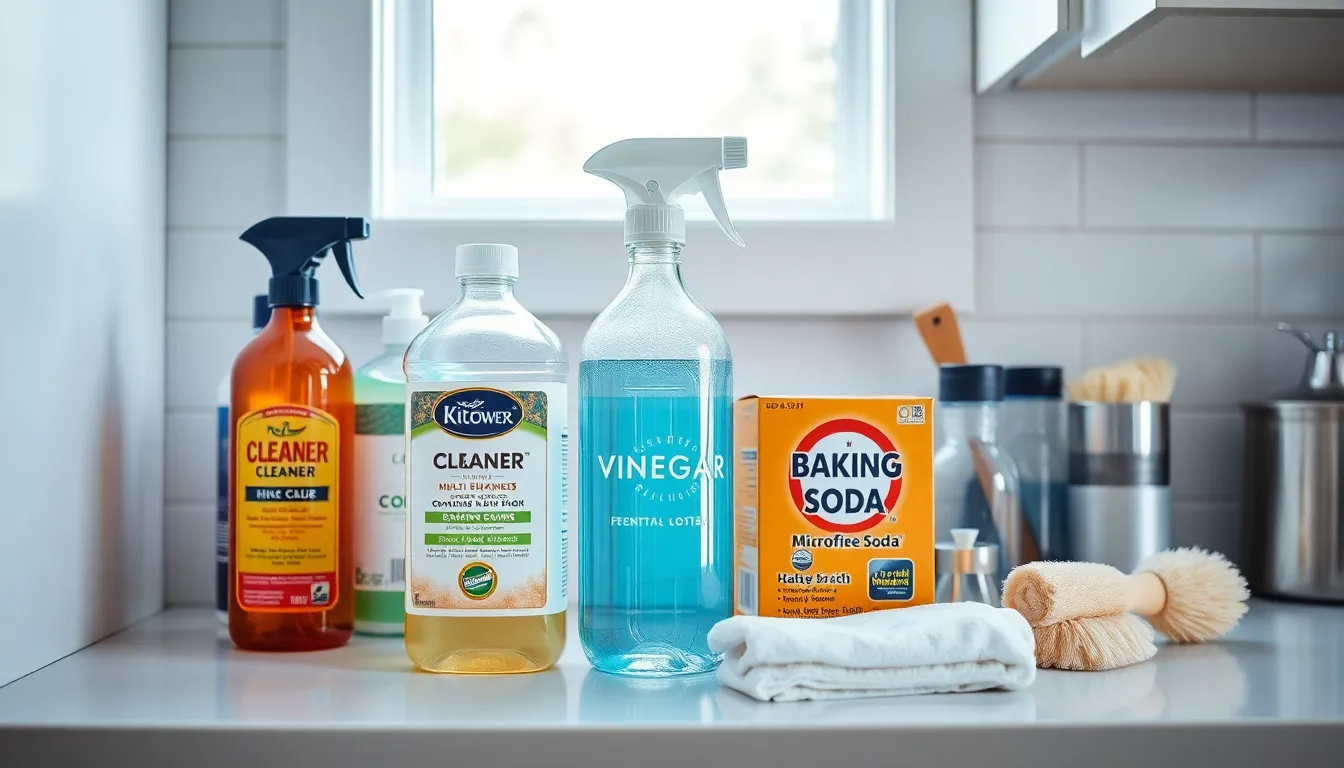
Cleaning kitchen cabinets requires specific tools and supplies. These items simplify the process and enhance effectiveness.
Recommended Cleaning Products
Using quality cleaning products boosts cleaning efficiency. Choose a multi-surface cleaner to tackle grease and grime. An all-purpose cleaner serves well on various surfaces, including wood and laminate. For tough stains, a degreaser can break down stubborn residues. Antimicrobial wipes help disinfect surfaces easily during quick clean-ups. Consider microfiber cloths for their ability to trap dust and dirt without scratching finishes. Finally, a soft-bristle brush can assist in accessing hard-to-reach areas, ensuring thorough cleaning.
DIY Cleaning Solutions
Homemade cleaning solutions offer effective alternatives to commercial products. Combine equal parts vinegar and water in a spray bottle for a natural cleaning solution that removes grease. Baking soda mixed with water forms a paste ideal for scrubbing tougher stains. Lemon juice works as a natural disinfectant and deodorizer, leaving a fresh scent. For a gentle wood cleaner, mix olive oil and vinegar, which nourishes the wood while cleaning. Each solution produces results without harsh chemicals, accommodating various preferences for maintaining cabinet cleanliness.
Top Kitchen Cabinet Cleaning Hacks
Keeping kitchen cabinets clean can become nearly effortless with these effective hacks. Each method offers a unique approach for tackling grime and stains.
Vinegar and Water Solution
Combining equal parts vinegar and water creates a powerful cleaning solution. This mixture effectively cuts through grease, making it ideal for everyday cabinet maintenance. Spray the solution onto a microfiber cloth before wiping the cabinets. Avoid soaking cabinets; a gentle wipe removes residues without damaging the finish. Rinsing with water afterward ensures no vinegar smell lingers.
Baking Soda Paste
To address tough stains, mix baking soda with a small amount of water to form a paste. This thick substance works wonders on persistent marks. Apply it directly to the stains and let it sit for a few minutes. Scrubbing gently with a soft-bristle brush helps lift stains without scratching the surface. Wipe away the paste with a damp cloth for a spotless finish.
Lemon Juice and Olive Oil Mixture
A combination of lemon juice and olive oil serves as both a cleaner and a polish. This natural mixture not only cleans but also enhances the shine of wooden cabinets. Mix two parts olive oil with one part lemon juice before applying it with a cloth. Rubbing the solution into the cabinets’ surfaces promotes a fresh scent and nourishes the wood. Buffing it out with a clean cloth reveals a streak-free shine.
Preventative Maintenance Tips
Regular maintenance prevents buildup and prolongs the lifespan of kitchen cabinets. Adopting a structured approach towards cleanliness ensures an appealing kitchen environment.
Regular Cleaning Schedule
Establishing a regular cleaning schedule keeps cabinets in optimal condition. Choose a specific day each week to wipe down surfaces with a gentle cleaner. Schedule deep cleaning sessions monthly to tackle stubborn grease and grime. Sticking to this timeline minimizes extensive cleaning efforts and reduces accumulated dirt. Encourage family members to contribute by assigning different tasks, creating a shared responsibility for maintaining a clean kitchen.
Protective Measures for Kitchen Cabinets
Implementing protective measures preserves the appearance of cabinets. Choose to line shelves and drawers with shelf liners to prevent scratches and stains from spills. Use coasters under frequently used items, like pots or appliances, to avoid damage. Avoid harsh cleaning products that can strip protective finishes. Opt for soft cloths when cleaning to prevent scratches and ensure a gentle touch all around the cabinetry. These small adjustments can significantly enhance the durability and aesthetics of kitchen storage.
Maintaining clean kitchen cabinets doesn’t have to be a daunting task. By incorporating these effective cleaning hacks into a regular routine, anyone can keep their cabinets looking fresh and inviting. The right tools and DIY solutions not only tackle stubborn grime but also promote a healthier cooking environment.
Establishing a consistent cleaning schedule and involving the whole family can make the process enjoyable and less overwhelming. With a few simple adjustments and preventative measures, kitchen cabinets can remain in excellent condition for years to come. Embracing these practices ensures a beautiful and functional kitchen space that reflects care and attention.