
The kitchen is the heart of the home, but when it comes to staging, it can sometimes feel more like a chaotic cooking show gone wrong. With a little creativity and some strategic planning, transforming that culinary battlefield into a show-stopping masterpiece is easier than you think. Whether you’re prepping for a sale or just want to impress your dinner guests, kitchen staging tips can turn your space from drab to fab faster than you can say “pass the salt.”
Importance Of Kitchen Staging
Kitchen staging enhances the overall impression of a home, playing a critical role in attracting potential buyers. A well-staged kitchen can create an inviting atmosphere that encourages engagement and connection. It showcases the kitchen’s features, making it easier for buyers to visualize their own lives in the space.
Staging makes clutter and disorganization less visible, allowing room for potential buyers to focus on the kitchen’s functionality and layout. This area often serves as the heart of the home, where families gather for cooking and conversation. By making it appealing, homeowners can significantly increase their home’s perceived value.
Research indicates that staged homes sell 73% faster than non-staged properties. Displays of essential kitchen tools and decorative elements can improve aesthetic appeal, making the kitchen feel warm and lived-in. Additionally, neutral colors and minimalistic designs attract a wider range of tastes, further enhancing buyer interest.
Highlighting key features, such as countertops and cabinets, matters in kitchen staging. Proper lighting showcases these elements, creating an open and spacious environment. Arrange furniture strategically, ensuring that there’s a clear path for movement and interaction.
Effective staging also includes ensuring that the kitchen is clean and free of personal items. Items on countertops should be limited to essentials and aesthetically pleasing arrangements. Considering the kitchen’s layout can maximize its impact, making it an appealing focus point in showing the property.
Essential Kitchen Staging Tips
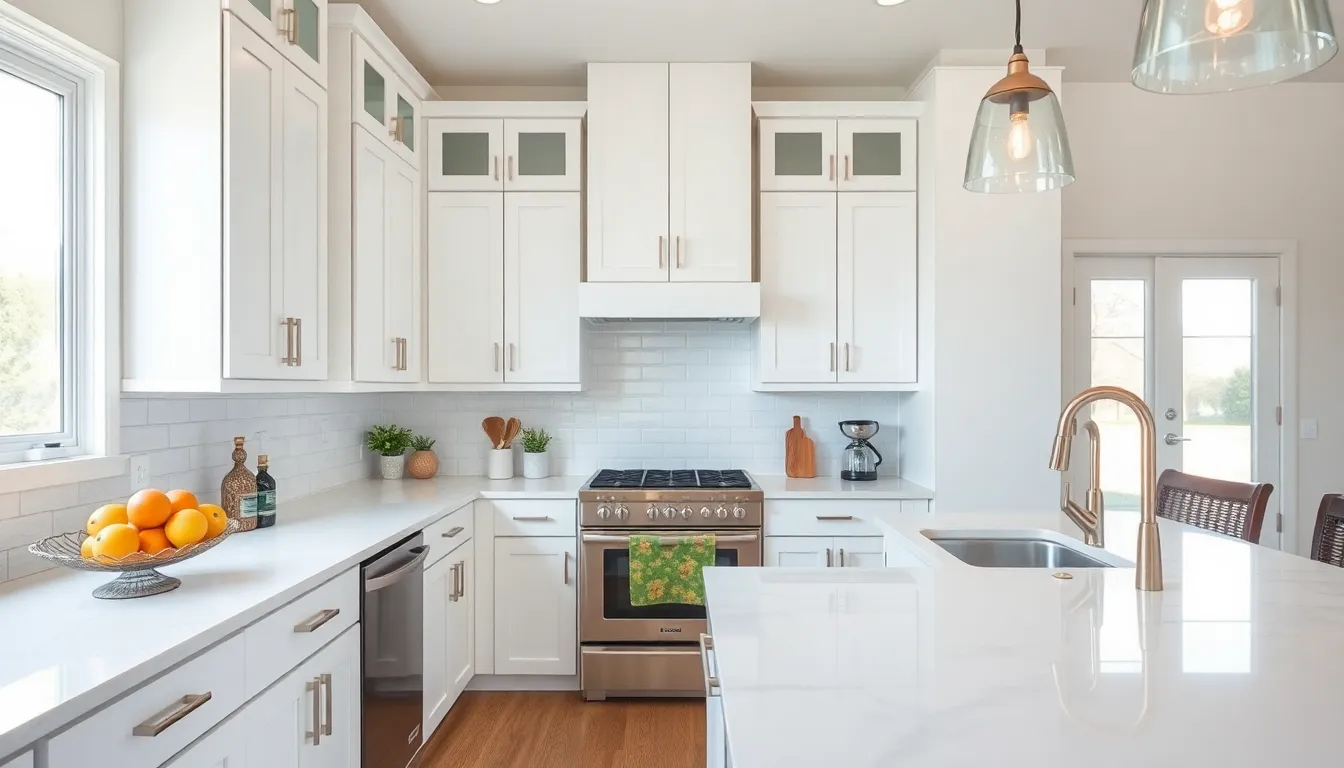
Staging a kitchen enhances its appeal and invites potential buyers or guests to envision their own memories within the space.
Declutter Your Space
Moving excess items off countertops creates an open environment. Clearing away appliances that aren’t used daily, such as toasters or blenders, reveals the kitchen’s usable surface area. Organizing cabinets and drawers also promotes a sense of order. A tidy look enhances visual appeal, allowing buyers to see the kitchen’s true potential. Removing personal items, including family photos and unique decorations, reduces distractions. Simplified spaces engage buyers through clarity and showcase functionality.
Enhance Countertop Appeal
Choosing minimal yet stylish decorative elements makes countertops more inviting. Incorporating a few carefully selected items such as a fruit bowl or fresh herbs adds a lively touch. Coordinating colors among these decorative pieces can unify the kitchen’s look. Utilizing trays to group items provides structure, maintaining a clean aesthetic. Surfaces should shine—regular cleaning emphasizes their material and cleanliness. Elegant dishware or glass containers can enhance functionality while contributing visual interest.
Update Hardware and Fixtures
Replacing outdated cabinet hardware can offer a fresh look without substantial investment. Knobs and pulls in modern finishes improve the overall aesthetic. Consider opting for cohesive designs that flow with the kitchen’s style. Updating light fixtures can also redefine the space, introducing a warm ambiance. Bright, energy-efficient lighting expands the area’s appeal while improving visibility. Similarly, replacing faucets with contemporary designs enhances functionality and modernizes the look. These small adjustments often yield significant results in overall impressions.
Creating a Welcoming Atmosphere
Creating a warm and inviting kitchen atmosphere is crucial for appealing to potential buyers or guests. Small adjustments can significantly enhance the space’s overall vibe.
Lighting Considerations
Natural light creates an inviting ambiance. Maximizing window exposure ensures a bright environment that feels open. For evening settings, consider layering lighting with fixtures such as pendant lights or under-cabinet lights. Combining warm bulbs encourages a cozy feeling, which attracts attention. Avoid harsh fluorescent lights that can create an unwelcoming atmosphere. Use dimmers for adjustable brightness, allowing for customizable lighting during various activities. Showcasing key features like countertops with proper lighting highlights their appeal, making the kitchen feel more spacious.
Accessorizing with Purpose
Purposeful accessorizing transforms a kitchen into a charming space. Focus on selecting items that enhance visual interest without overwhelming the area. A stylish fruit bowl can serve as a focal point while bringing vibrant colors into the design. Fresh herbs in attractive pots add natural elements, encouraging a lively atmosphere. To maintain professionalism, avoid excessive decor. Each accessory should serve a purpose, whether functional or aesthetic. Well-placed kitchen tools can showcase functionality while promoting an organized appearance. Thoughtful accessorizing makes a kitchen memorable and inviting, encouraging potential buyers to envision themselves in the space.
Final Touches for a Successful Staging
Creating an inviting atmosphere is crucial for successful kitchen staging. Focus on small details that enhance the overall presentation. Add fresh flowers or a vibrant fruit bowl to countertops; these elements introduce a splash of color and life.
Include kitchen accessories that blend functionality with style. Selecting utensils or pots that match the kitchen’s color palette can elevate visual appeal without cluttering the space. Invest in decorative storage containers; these keep essentials organized while serving as attractive decor.
Lighting plays a significant role in staging effectiveness. Utilize under-cabinet lighting to highlight countertops, creating a warm glow that enhances the space’s inviting nature. Opt for soft, layered lighting to establish a balanced ambiance suitable for both cooking and entertaining.
Consider the appliances on display. Keeping only essential items visible, such as a coffee maker or a stand mixer, allows buyers to visualize their routines. Ensure these items are spotless and in good condition, reflecting a well-maintained kitchen.
Display table settings or cookbooks on counters or dining areas. This approach suggests the kitchen’s potential for gatherings or family meals, appealing to emotional connections.
Cleanliness cannot be overlooked. A thorough cleaning of surfaces, cabinets, and floors sets a professional tone, making the kitchen feel both fresh and spacious.
By combining these final touches, sellers or hosts can achieve a meticulously staged kitchen that attracts potential buyers and creates a positive impression.
Transforming a kitchen through staging can significantly enhance its appeal and functionality. By focusing on decluttering and organizing, homeowners can create an inviting atmosphere that resonates with potential buyers or guests. Simple updates like fresh decor and improved lighting can make a substantial difference in how the space is perceived.
Attention to detail is crucial. Small touches such as vibrant accessories or well-placed plants can elevate the kitchen’s charm. It’s all about striking a balance between style and practicality. When executed thoughtfully, these kitchen staging tips can lead to quicker sales and a more enjoyable entertaining space, making it a worthwhile investment for any homeowner.